
FEA & CFD simulation services for vehicles and their parts.
Thirteen simulation capabilities, from full-vehicle crash and NVH to casting, battery thermal and drone rotors, delivered by engineers with OEM programme experience.
Switch the lens to see what each discipline reveals. Below it: real results from our projects.
yiyu-agent · session
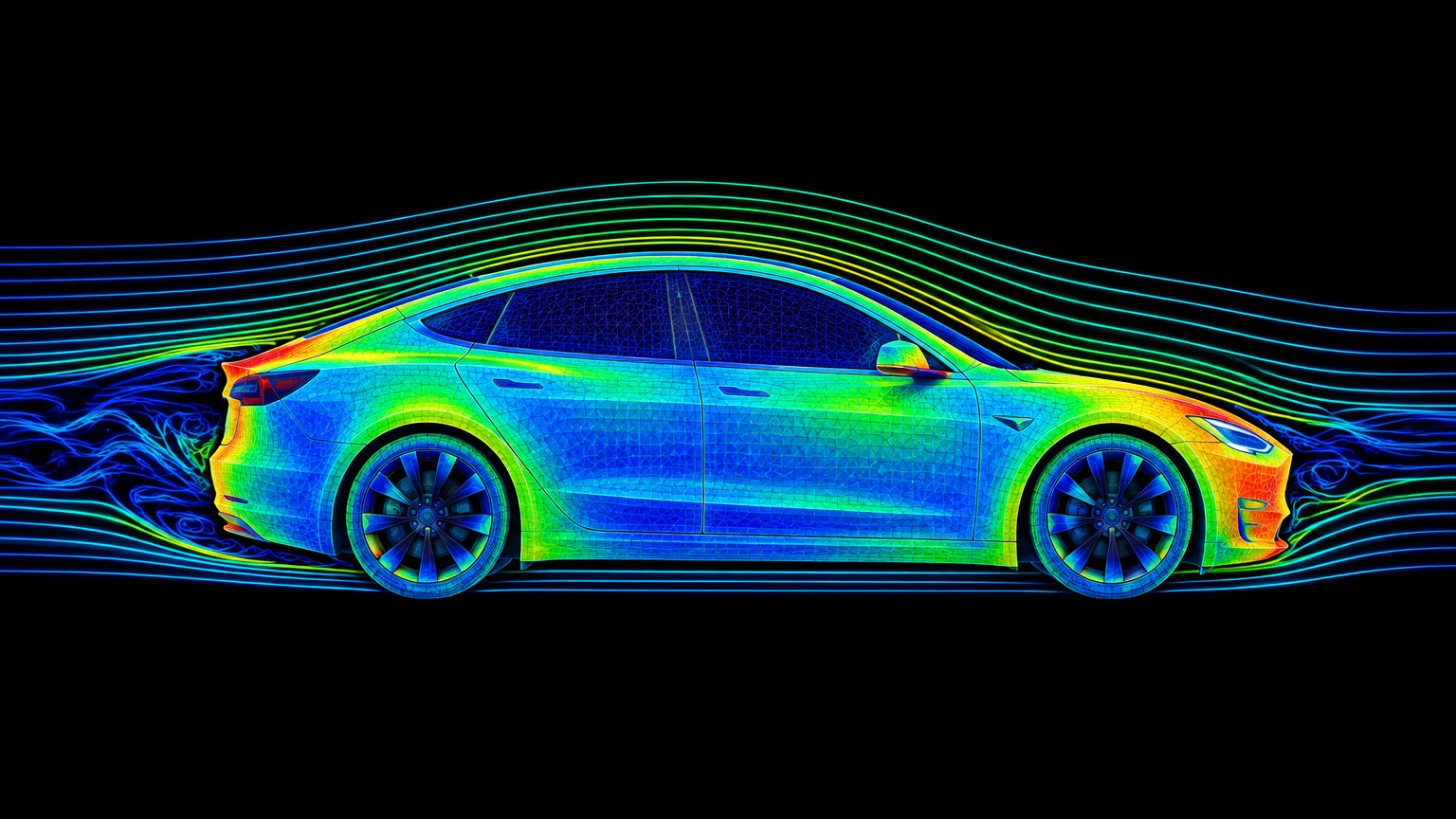
Lens 06 / 13Aerodynamics & thermal CFD
Velocity magnitudeminmax
Tap a glowing point
Real results from our projects
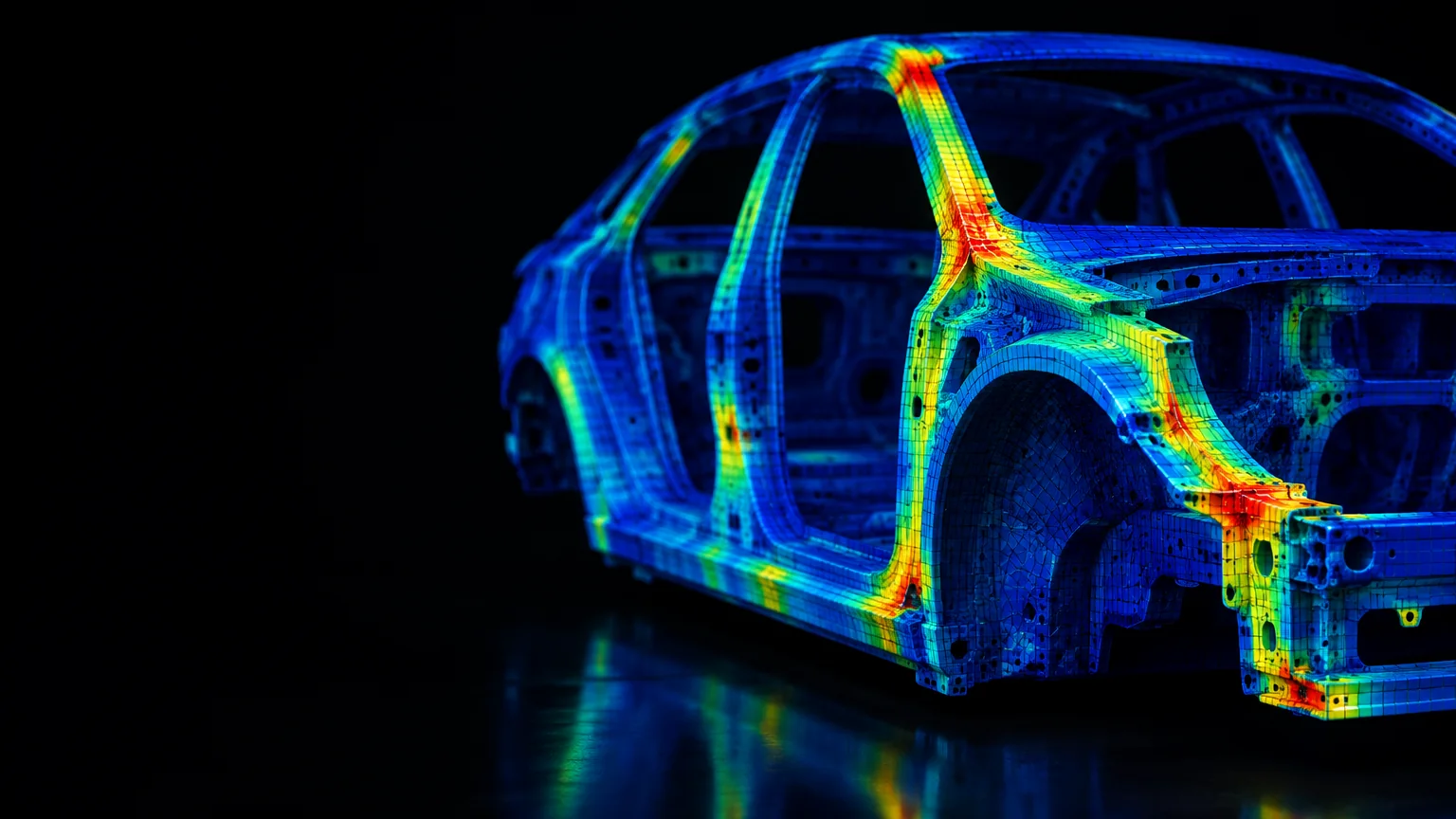
Full-vehicle frontal impact model
Full-vehicle CAE · from our projects
Crash safety
Make the structure and the restraints work as one.
Full-vehicle frontal, side, rear and pole impacts to C-NCAP, Euro NCAP and FMVSS protocols, with occupant and restraint matching for belts, airbags and curtains. Pedestrian head and leg impact for hood and bumper systems.
You receive
Deformation and intrusion, pulse and occupant injury, restraint parameter tuning
Modal analysis, static and dynamic stiffness, frequency response, VTF/NTF transfer functions, transfer-path analysis and road noise for body-in-white, trimmed body and subsystems. Acoustic FEM for cabin sound pressure at the driver and passenger ears.
You receive
Mode maps, panel contribution, damping and mount recommendations
Multibody models for steady-state cornering, step steer, lane change, ride comfort and load cases for durability. Suspension kinematics and compliance and steering ratio studies.
You receive
K&C curves, handling metrics, road-load data for durability
Static strength, misuse loads, stiffness and fatigue life for bodies, subframes, brackets and welds, with topology, shape and gauge optimisation to take out mass.
You receive
Stress and damage maps, weld fatigue, lightweight design proposals
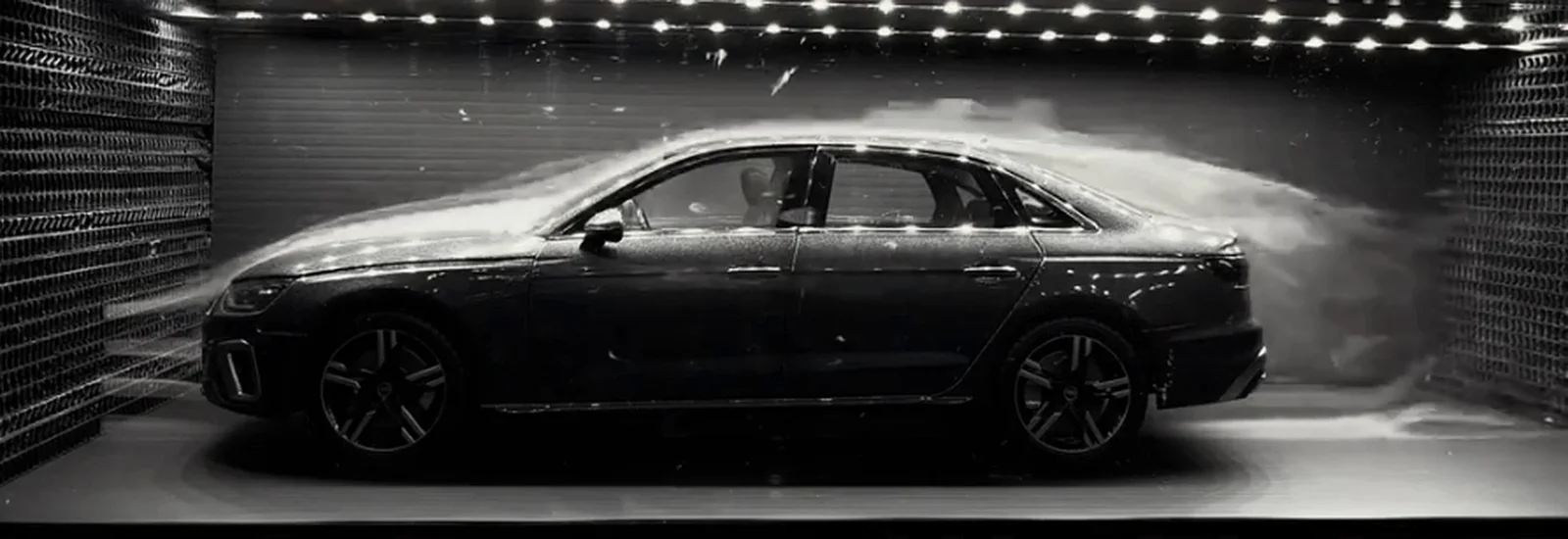
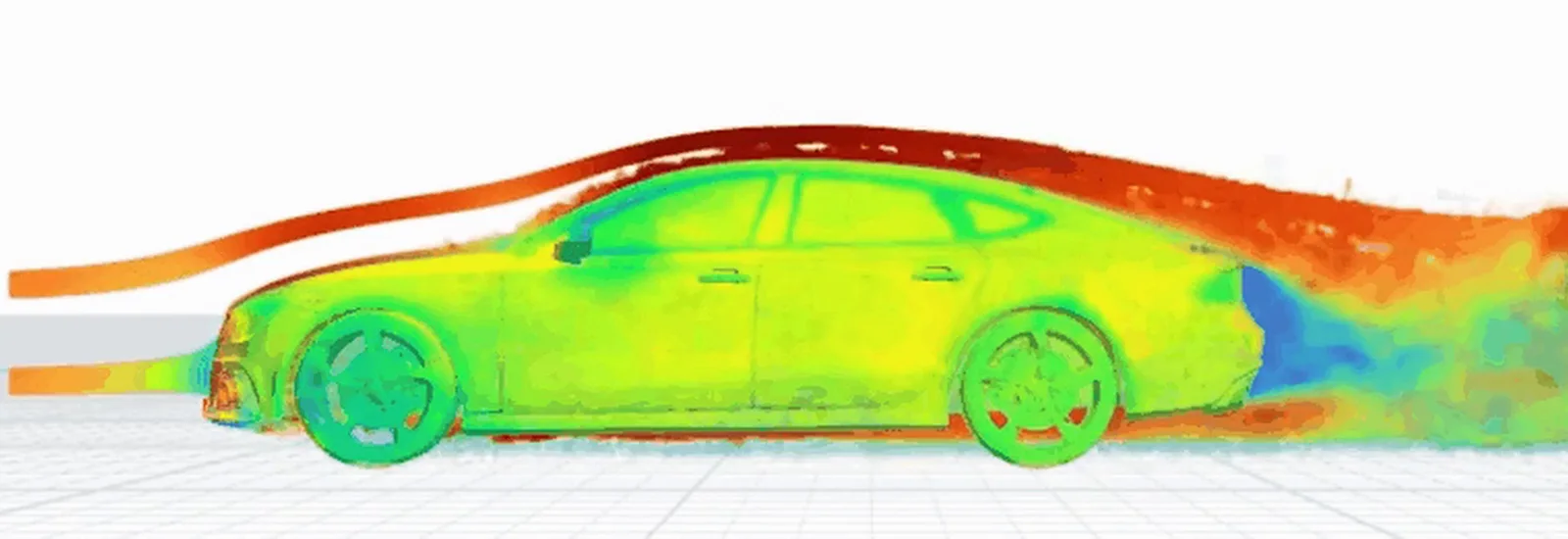
External aerodynamics for drag and lift, wake and separation; underhood and front-end cooling airflow; brake cooling, fan performance, cabin HVAC and wind-noise sources.
You receive
Cd and Cl, pressure and velocity fields, cooling airflow and temperatures
Longitudinal vehicle models for EVs and hybrids: acceleration, gradeability, top speed and energy consumption on WLTC, CLTC and NEDC cycles, with motor operating-point and gear-ratio studies.
You receive
Range and consumption, acceleration, component sizing
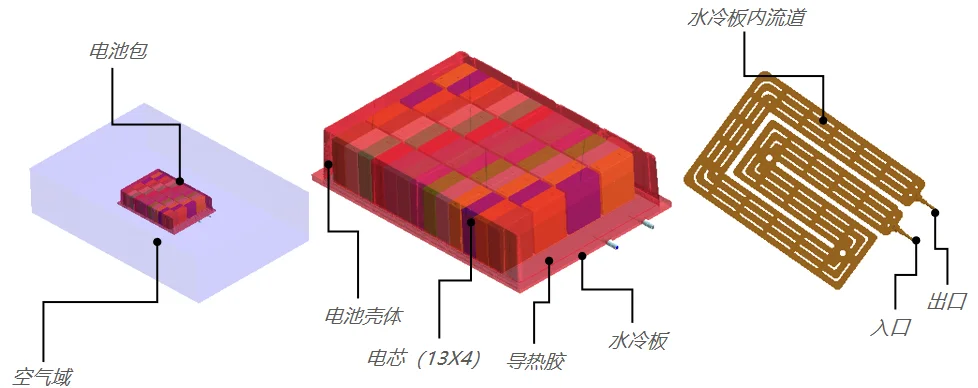
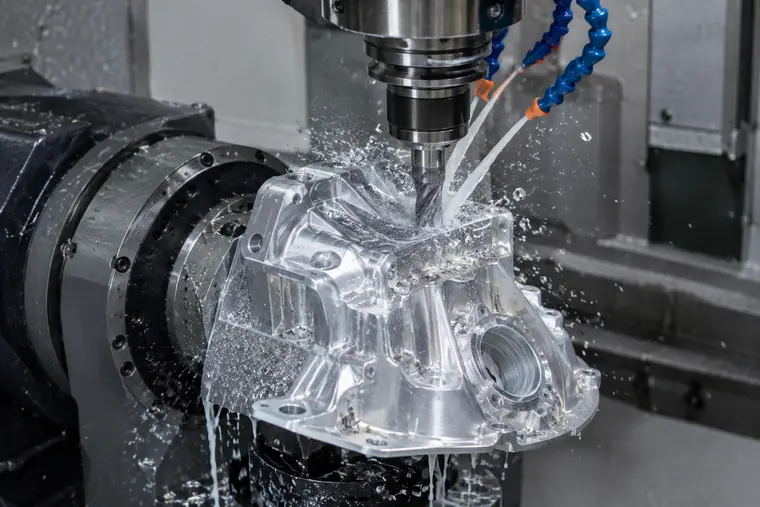
E-drive and battery systems, chassis, interior and exterior trim, thermal management and electrical systems: strength, modal, thermal and fatigue analysis for the parts suppliers actually make.
You receive
Pass/fail against your specification, design changes with evidence
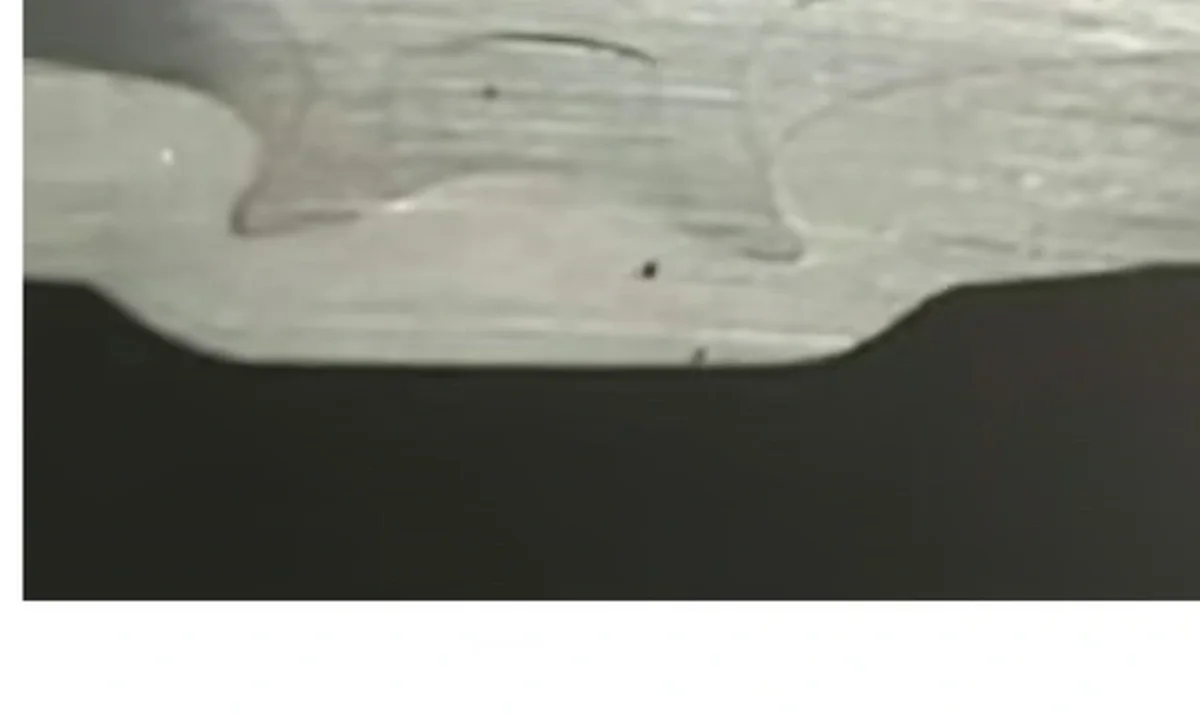
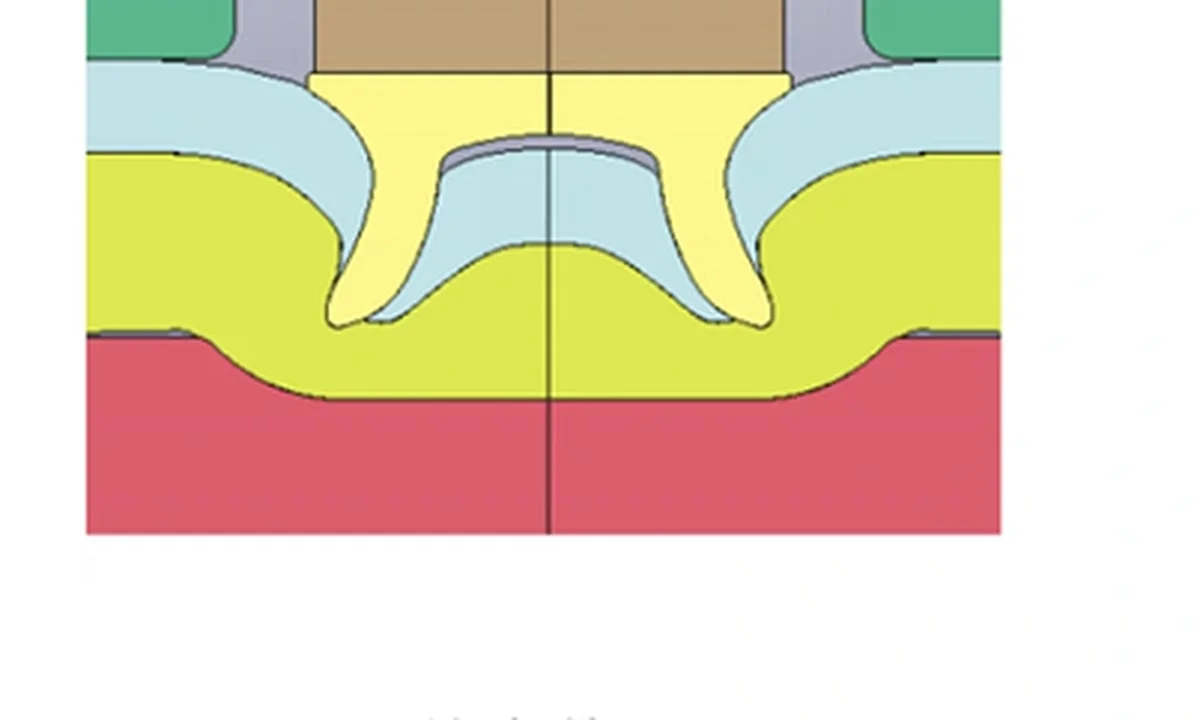
Casting fill and solidification, injection mould-flow, stamping formability and springback, welding distortion and riveted-joint formation. Results go straight into tool and process design.
You receive
Gate and vent layout, warpage, springback compensation, weld sequence
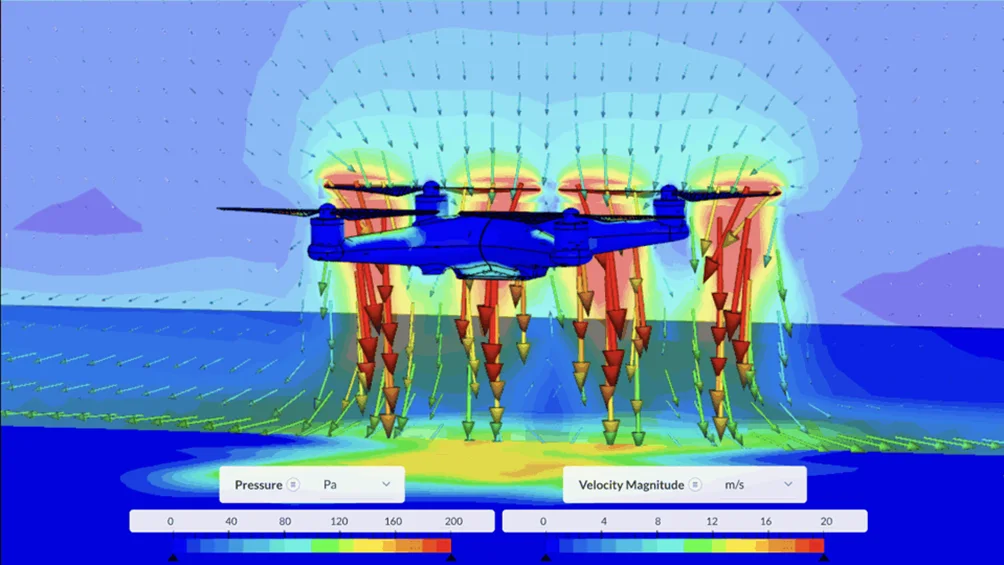
Rotor aerodynamics, rotor–airframe interference and stability, arm natural frequencies, vibration-excited rotor loads and drop impact for drones and eVTOL aircraft.
Yiyu AI 2.0 at work: CAD to PASS on a heat-shield bracket (real recording, sped up)
New sectors · from our projects
In-house AI agents
Engineers decide. Our agents do the clicks.
We build our own simulation agents. Yiyu AI 2.0 is in daily use: give it a CAD part and it cleans the geometry, builds and checks the mesh, sets up and solves the analysis, reviews modes and stresses against targets and writes a pass/fail report. The recording shows it taking a sheet-metal heat-shield bracket from CAD to verdict. Nodus is our multi-expert platform: specialist agents for static, modal, random vibration, CFD and crash analysis, each started from a one-sentence task. An engineer reviews every result before it reaches you.
You receive
Faster iterations, consistent quality, engineer review at every step
Drag the handle. On the left, the physical test; on the right, our simulation of the same event.
Physical testYiyu simulation
Why it pays
Simulation is cheaper than a second prototype.
CAE has become one of the three pillars of engineering research. It shortens prototype and test loops, protects your intellectual property and puts weight and cost where the performance is.
FasterFewer design and test iterations shorten the development cycle.
CheaperFewer physical tests and test rounds lower development cost.
LighterOptimised designs cut mass and part cost: 3.5 kg out of one subframe.
Right first timeRepeated optimisation helps every target pass at the first physical test.
Working with us
From model to decision in four steps.
Scope
Share CAD, loads and targets under NDA. We confirm load cases, deliverables and a fixed price.
Model
Meshing, materials and boundary conditions are built and checked against your standards.
Solve & optimise
We run the cases, find the drivers and test design changes that fix them.
Report
A clear report, the models and a review call with the engineer who did the work.
It depends on model size, load cases and how much geometry clean-up is needed. A single component strength or modal check is usually quoted in days; full-vehicle crash or aerodynamics programmes are scoped in phases. Send the CAD and targets for a fixed quotation.
Which file formats do you accept?
STEP, IGES, Parasolid, CATIA and NX native files, plus existing HyperMesh, ANSA, Abaqus or Nastran models. We also work from 2D drawings for simple parts.
Do you correlate simulation with physical tests?
Yes. Our case studies pair simulation with wind-tunnel smoke, impact-test footage, fan test rigs and EMC chamber results, and we can arrange tests through partner labs.
Can you support us as an extension of our CAE team?
Yes. Many suppliers use us as a shared engineering team: our engineers follow your templates, report formats and OEM specifications, and join your design reviews remotely.
Send the model. Get the answer.
Send a drawing or describe the decision you need to make. An engineer replies within one working day, in English or Chinese.